
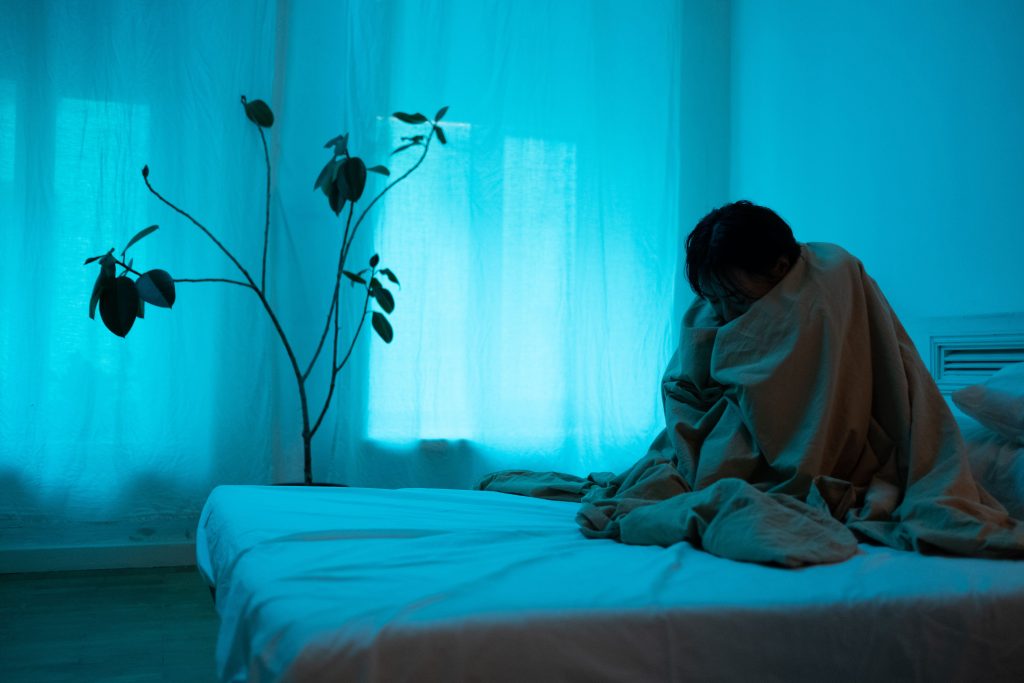
A client comes back for the third session having tried everything you gave her, the breathing exercises, the better boundaries, the earlier bedtime, and she’s not better. If anything, the cynicism in her voice has deepened. That’s often the moment a practitioner needs to ask an uncomfortable question: was this ever ordinary stress to begin with? Roughly a quarter of the South African workforce is now reporting symptoms of clinical burnout (Discovery Health, 2025), and a stress toolkit applied to a burnout presentation won’t just under-deliver, it can leave a client feeling like they’ve failed at the fix.
” was this ever ordinary stress to begin with? “
Where the Mix-Up Actually Happens
The distinction isn’t semantic, the World Health Organisation’s ICD-11 classifies burnout as an occupational phenomenon resulting specifically from chronic workplace stress that has not been successfully managed, characterised by three dimensions: exhaustion, growing cynicism or mental distance from the job, and reduced professional efficacy (WHO, 2019). EAPA-SA’s own guidance draws the practical line even more plainly: stress that is short-lived or tied to a specific goal isn’t inherently harmful, and can even sharpen performance, whereas stress that feels never-ending and arrives with exhaustion, apathy and hopelessness is likely tipping into burnout (EAPA-SA, 2022). Stress has an end point in sight. Burnout has stopped believing there is one.
” stress that is short-lived or tied to a specific goal isn’t inherently harmful “
Why the Same Toolkit Falls Short
This is precisely why a generic stress-management session so often fails a burnout presentation. Breathing techniques and time-management strategies address acute physiological activation, useful for the client who’s stressed about a deadline, largely irrelevant to the client whose cynicism and depleted sense of efficacy have been building for eighteen months. Burnout’s cynicism dimension in particular needs something coping techniques were never designed to touch: rebuilding a client’s relationship to meaning and control at work, often alongside a conversation with the organisation itself about workload or role clarity, not just the individual’s stress response.
” Burnout’s cynicism dimension in particular needs something coping techniques were never designed to touch “
Getting the Diagnosis Right Is Its Own Skill
EAPA-SA takes this distinction seriously enough to build it into practitioner development directly, recent Eduweek programming has explicitly set out to help practitioners recognise burnout in its diverse and hidden forms, precisely because it doesn’t always present in the ways a checklist expects (EAPA-SA, 2025). That’s a professional competency worth taking as seriously as any clinical assessment skill, because the intervention that follows depends entirely on getting the diagnosis right first.
Diagnose Before You Prescribe
A client who isn’t improving may not need a different technique, she may need a different diagnosis. Sharpening that distinction is exactly the kind of clinical rigour EAPA-SA’s community of practice exists to keep developing.
References
- Discovery Health, 2025. Cited in “The 2026 Shift: Moving from Resilience to Systemic Mental Health Strategy,” EAPA-SA, 2026. Available at: https://www.eapasa.co.za/the-2026-shift-moving-from-resilience-to-systemic-mental-health-strategy/
- World Health Organization (WHO), 2019. Burn-out an “Occupational Phenomenon”: International Classification of Diseases. Available at: https://www.who.int/news/item/28-05-2019-burn-out-an-occupational-phenomenon-international-classification-of-diseases
- EAPA-SA, 2022. Measures to Combat Employee Burnout. Available at: https://www.eapasa.co.za/measures-to-combat-employee-burnout/
- EAPA-SA, 2025. Eduweek Programme 2025. Available at: https://www.eapasa.co.za/eduweek-2026/eduweek-programme-2025/